How to Hire an Interior Designer in Durgapur: Complete 2026 Guide
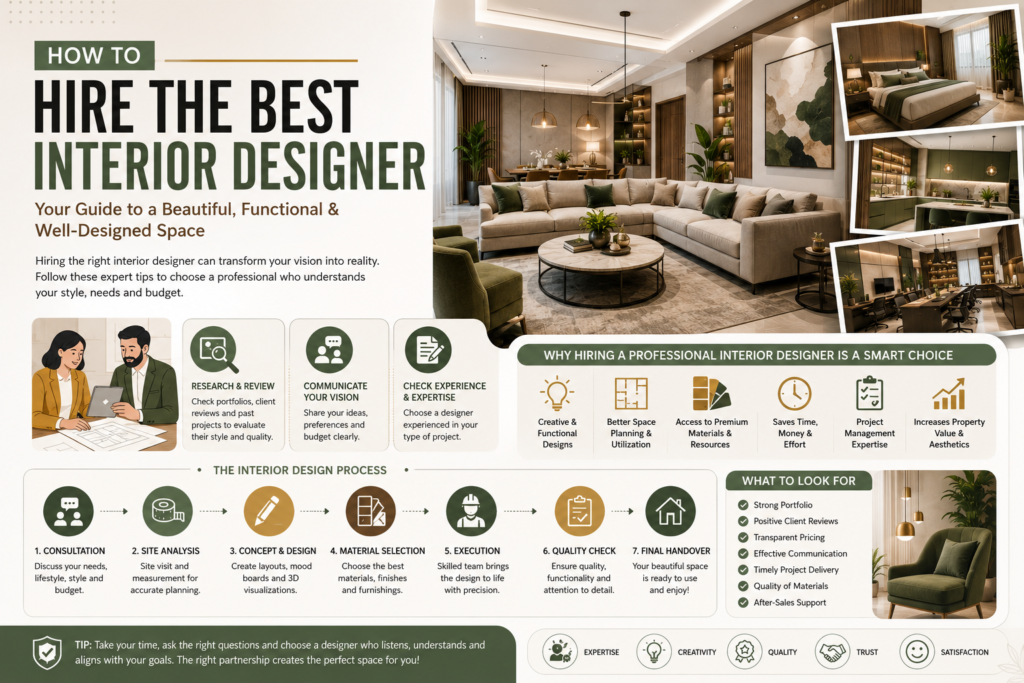
Learn how to hire the best interior designer for your home, office, modular kitchen, or commercial space. Discover expert tips, costs, questions to ask, red flags to avoid, and how to choose the right interior designer for your project.
How to Hire the Best Interior Designer
Designing your dream home, office, showroom, restaurant, or commercial space is a significant investment. The success of your project depends largely on choosing the right interior designer. A skilled interior designer can transform an ordinary space into a beautiful, functional, and valuable environment that perfectly matches your lifestyle, brand, and budget.
However, with so many interior design firms and freelance designers available today, selecting the best interior designer can feel overwhelming.
This comprehensive guide will help you understand exactly how to hire the best interior designer while avoiding costly mistakes.
Why Hiring a Professional Interior Designer Matters
Many people believe interior design is simply about choosing furniture and paint colors. In reality, professional interior designers manage much more than aesthetics.
A professional designer helps with:
- Space planning
- Furniture layouts
- Material selection
- Lighting design
- False ceiling design
- Modular kitchen planning
- Storage optimization
- Budget management
- Project coordination
- Vendor management
- Quality control
The right designer can save you time, money, and stress while ensuring your space looks exceptional.
Benefits of Hiring an Interior Designer
1. Professional Expertise
Interior designers understand design principles, color psychology, materials, lighting, ergonomics, and construction processes.
Their expertise helps create interiors that are both beautiful and practical.
2. Better Space Utilization
A professional designer knows how to maximize every square foot of available space.
This is especially valuable for:
- Small apartments
- Compact homes
- Studio flats
- Small offices
- Retail stores
3. Cost Savings
Contrary to popular belief, hiring an interior designer often saves money.
Designers help avoid:
- Expensive mistakes
- Wrong material purchases
- Poor furniture choices
- Costly renovations
4. Access to Better Resources
Professional designers have connections with:
- Contractors
- Furniture manufacturers
- Material suppliers
- Lighting vendors
- Decor specialists
This often results in better pricing and higher quality products.
Define Your Interior Design Goals First
Before hiring an interior designer, clearly define your project goals.
Ask yourself:
What type of project is it?
- Residential interior design
- Commercial interior design
- Office interior design
- Modular kitchen design
- Bedroom interior design
- Living room design
- Restaurant interior design
- Showroom interior design
What is your budget?
Knowing your budget helps narrow your options and prevents misunderstandings later.
What style do you prefer?
Popular styles include:
- Modern Interior Design
- Contemporary Design
- Minimalist Design
- Luxury Interior Design
- Scandinavian Design
- Industrial Design
- Traditional Design
- Classic Design
Research Interior Designers Thoroughly
Never hire the first designer you find online.
Spend time researching multiple professionals.
Look for:
- Company website
- Google reviews
- Social media profiles
- Project galleries
- Client testimonials
- Industry experience
A reputable interior designer should have a strong online presence showcasing completed projects.
Review Their Portfolio Carefully
A designer’s portfolio reveals their capabilities more than anything else.
Examine:
Design Quality
Look for:
- Creative layouts
- Attractive color schemes
- Functional designs
- High-quality finishes
Variety
A strong portfolio should demonstrate experience with:
- Homes
- Apartments
- Villas
- Offices
- Showrooms
- Retail stores
- Restaurants
Consistency
Quality should remain consistent across all projects.
Check Experience and Specialization
Not every designer specializes in every type of project.
For example:
Residential Interior Designer
Best for:
- Homes
- Apartments
- Villas
- Duplexes
Commercial Interior Designer
Best for:
- Offices
- Retail stores
- Restaurants
- Hotels
- Clinics
Modular Kitchen Designer
Best for:
- Kitchen layouts
- Storage solutions
- Cabinet systems
Choose someone experienced in your specific project type.
Read Client Reviews and Testimonials
Customer reviews provide valuable insights.
Look for comments about:
- Communication
- Timeliness
- Quality of work
- Professionalism
- Problem-solving abilities
Consistent positive feedback is a strong indicator of reliability.
Schedule an Initial Consultation
Most professional interior designers offer consultations.
During the meeting, discuss:
- Your goals
- Budget
- Timeline
- Design preferences
- Project expectations
Pay attention to how well they listen and understand your requirements.
Important Questions to Ask an Interior Designer
Before hiring, ask:
1. How many years of experience do you have?
Experience often translates into smoother project execution.
2. Can I see completed projects?
Reviewing completed work helps assess quality.
3. Do you provide 3D designs?
Modern designers should offer realistic 3D visualizations.
4. Do you handle execution?
Some designers only create designs while others manage complete execution.
5. How do you manage project timelines?
Clear scheduling is essential.
6. What materials do you recommend?
Material quality directly impacts durability.
7. What is included in your pricing?
Always request detailed quotations.
Understand Their Design Process
A professional designer should have a structured process.
Typical stages include:
Consultation
Understanding client needs.
Site Measurement
Accurate space evaluation.
Concept Development
Creating design ideas.
3D Visualization
Presenting realistic previews.
Material Selection
Choosing finishes and furnishings.
Project Execution
Implementing the design.
Final Handover
Delivering the completed project.
Compare Multiple Quotations
Don’t choose based solely on the lowest price.
Compare:
- Scope of work
- Materials included
- Design services
- Execution quality
- Warranty coverage
The cheapest option is rarely the best value.
Understand Interior Design Costs
Several factors influence pricing:
Project Size
Larger spaces generally cost more.
Material Selection
Premium materials increase costs.
Customization Level
Highly customized interiors require more work.
Design Complexity
Luxury designs often involve greater detail.
Location
Interior design costs vary by city and region.
Verify Material Quality
Quality materials determine how long your interiors last.
Common materials include:
- Marine plywood
- BWR plywood
- MDF
- HDF
- Acrylic finishes
- Laminates
- Veneers
- Quartz countertops
- Granite surfaces
Always ask about material specifications.
Look for Transparent Pricing
A trustworthy interior designer provides:
- Detailed estimates
- Material breakdowns
- Labor costs
- Payment schedules
Avoid vague quotations.
Check Communication
Successful projects require clear communication.
Choose a designer who:
- Responds promptly
- Explains concepts clearly
- Provides regular updates
- Listens to your concerns
Good communication prevents misunderstandings.
Ensure They Understand Your Lifestyle
Your interiors should reflect how you live and work.
For example:
Families may need:
- Child-friendly designs
- Extra storage
- Durable materials
Professionals may prefer:
- Home office spaces
- Minimalist layouts
- Smart technology integration
Verify Project Management Capabilities
Interior projects involve multiple teams.
A good designer coordinates:
- Carpenters
- Electricians
- Painters
- False ceiling installers
- Furniture manufacturers
Effective management ensures smooth execution.
Red Flags to Avoid
Be cautious if a designer:
- Refuses to show past work
- Provides unrealistic pricing
- Makes vague promises
- Avoids written agreements
- Has poor online reviews
- Misses appointments repeatedly
These are warning signs of potential problems.
Why Local Interior Designers Can Be a Better Choice
Hiring a local interior designer offers several advantages.
Benefits include:
- Faster site visits
- Better vendor networks
- Local material knowledge
- Easier communication
- Faster project completion
For example, homeowners in Durgapur often benefit from working with experienced local interior designers familiar with regional suppliers and construction practices.
Technology and Modern Interior Design
Today’s leading interior designers use:
- 3D rendering software
- Virtual walkthroughs
- Smart home integration
- Advanced project management tools
Technology improves design accuracy and client satisfaction.
Interior Design Trends in 2026
Popular trends include:
Sustainable Design
Eco-friendly materials and energy-efficient solutions.
Smart Homes
Integrated automation systems.
Multifunctional Spaces
Flexible layouts for modern lifestyles.
Minimalist Luxury
Clean aesthetics with premium finishes.
Biophilic Design
Natural elements and greenery.
Final Checklist Before Hiring an Interior Designer
✔ Review portfolio
✔ Check reviews
✔ Verify experience
✔ Understand pricing
✔ Request 3D designs
✔ Discuss timeline
✔ Compare quotations
✔ Verify material quality
✔ Check communication style
✔ Sign a detailed agreement
Conclusion – Hire the Best Interior Designer
Hiring the best interior designer is one of the most important decisions you’ll make when creating a new home, renovating an existing property, or designing a commercial space. The right designer combines creativity, technical expertise, project management , and a deep understanding of your needs to deliver exceptional results.
Take time to research, compare options, review portfolios, and ask the right questions before making your final decision. A well-chosen interior designer can turn your vision into reality while maximizing your investment and creating a space you’ll enjoy for years to come.
Whether you’re planning a luxury home, modern apartment, modular kitchen, office interior, showroom, restaurant, or commercial project, choosing the right interior designer is the first step toward a successful transformation.